Time Zone Adaptations Reshaping Betting Markets for NBA Road Games and International Horse Racing Meets
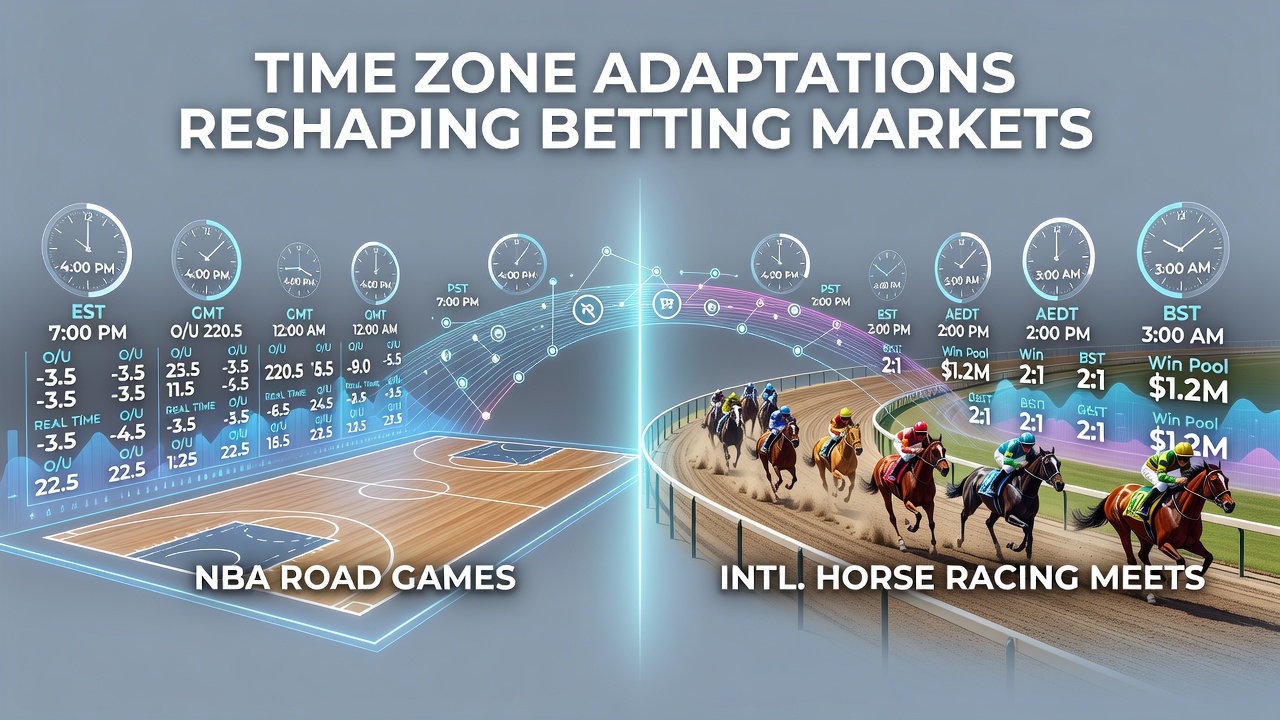
Time zone differences create measurable shifts in athletic output that ripple through betting lines for NBA road contests and cross-border horse racing fixtures alike, with data from performance tracking systems showing consistent patterns in how circadian misalignment affects results. Teams crossing multiple zones encounter altered sleep cycles and recovery windows that influence scoring margins and pace, while international race meetings see similar disruptions for horses and jockeys traveling from distant hemispheres. Bookmakers respond by recalibrating spreads and totals based on historical performance datasets rather than anecdotal impressions, and these adjustments appear in real-time markets during extended travel periods.
NBA Road Game Dynamics Under Time Zone Pressure
Coastal mismatches in the NBA generate documented edges when western conference squads travel eastward for back-to-back fixtures, and figures compiled by league analytics partners reveal that teams playing within 24 hours of a three-hour zone crossing post lower field goal percentages in the first half of games. Observers note that eastbound travel tends to compress rest intervals more than westbound routes because body clocks advance rather than delay, which alters defensive rotation speed and rebounding efficiency according to biometric wearables issued to players. Markets incorporate these patterns through line movement that tightens totals when multiple zone crossings stack within a seven-day window, especially during the compressed schedule blocks that occur each spring. In July 2026, several western teams scheduled exhibition games in Asia before the new season, providing fresh datasets that oddsmakers integrated into preseason road-game projections.
International Horse Racing Meets and Circadian Factors
Equine athletes crossing hemispheres for major meetings in Australia, Japan, and the Middle East encounter parallel recovery demands that affect stride length and finishing kick, and veterinary monitoring reports from event organizers indicate that horses arriving from Europe or North America require five to seven days to restore peak muscle function after long-haul flights. Jockeys face identical challenges, with reaction times measured in simulated race conditions showing temporary declines until acclimatization completes. Betting exchanges adjust win probabilities and place odds accordingly, drawing on multi-year race result archives that flag underperformance in the opening races of a meeting for recently arrived runners. What's notable is how these patterns cluster around specific meeting types, such as the winter carnivals in the southern hemisphere where northern hemisphere runners often face combined jet lag and seasonal daylight changes.

Market Mechanisms Responding to Travel Data
Betting platforms now integrate automated feeds from travel and performance databases that flag fixtures involving significant zone shifts, allowing odds to reflect empirical win rates rather than uniform assumptions. Research conducted by the Australian Sports Commission on equine transport logistics demonstrates that horses traveling more than eight time zones show a measurable drop in first-race success rates, prompting local bookmakers to shade morning-line favorites accordingly. In parallel, NBA-specific studies from academic centers track how consecutive road games across zones widen or narrow point spreads in ways that correlate with rest differentials. These adjustments occur incrementally as injury reports and practice footage arrive, creating layered market movements that reward bettors monitoring cumulative travel loads.
Combined Effects in Global Scheduling Windows
Overlap periods when NBA road trips coincide with major racing carnivals amplify the visibility of time-zone impacts because shared data platforms allow cross-sport comparisons of recovery metrics. Figures released by regulatory bodies in multiple jurisdictions show increased betting volume on totals and place markets during these windows, driven by the predictable nature of early-meeting or early-game underperformance. Yet the reality is that sharp bettors track cumulative zone crossings across a season rather than isolated events, building models that account for both direction of travel and number of days between arrivals and competition. This approach has led to refined algorithms that sportsbooks deploy to maintain balanced books when public perception lags behind the data.
Conclusion
Time zone adaptations continue to reshape market structures for NBA road games and international horse racing meets through data-driven line adjustments that reflect documented performance decrements. As travel schedules expand in 2026 and beyond, both sports will supply additional longitudinal datasets that refine how odds incorporate circadian variables, maintaining a feedback loop between athletic output and wagering frameworks.