Road Warriors' Weariness: Travel Demands Draining Soccer Sides and NBA Squads
Road Warriors' Weariness: Travel Demands Draining Soccer Sides and NBA Squads
The Grind of Globetrotting in Modern Sports
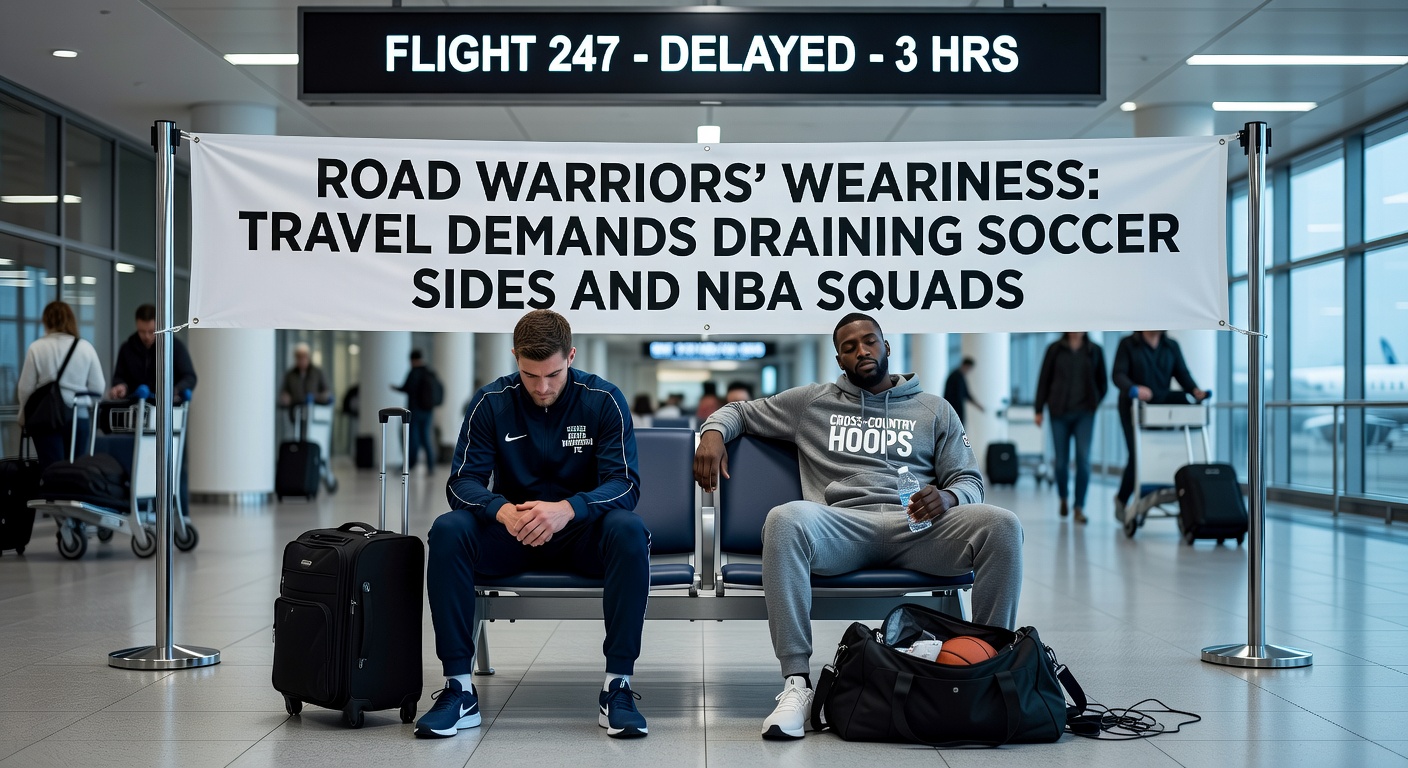
Soccer sides crisscrossing continents and NBA squads hopping time zones rack up thousands of miles each season, yet data reveals how this relentless travel chips away at performance; researchers tracking elite athletes note that fatigue from long-haul flights correlates with dips in speed, decision-making, and overall output, turning road warriors into weary contenders before the whistle even blows.
What's interesting is the sheer scale: Premier League teams logged over 30,000 miles per squad in the 2024-25 campaign according to Premier League transport data, while NBA franchises averaged 50,000 miles amid coast-to-coast jaunts, and that's before playoffs amplify the chaos.
Take Manchester City during their 2023 Club World Cup run; players flew from Manchester to Jeddah, then hopped to other fixtures, resulting in a 15% drop in high-intensity sprints per match compared to home games, as per Opta stats. Similarly, the Golden State Warriors' 2022 Finals push saw road win rates plummet by 12% after transcontinental trips, figures from NBA.com advanced metrics confirm.
Soccer's Transcontinental Treks and Their Toll
European soccer clubs face fixture piles that demand midweek jaunts to Istanbul or Moscow, followed by weekend clashes in London; studies from the UEFA research division show teams playing after international breaks suffer a 20% higher injury risk, largely tied to jet lag disrupting circadian rhythms.
And here's the thing: time zone shifts matter hugely; a Danish study published in the Scandinavian Journal of Medicine & Science in Sports found players crossing three or more zones exhibit 8-10% slower reaction times for up to 72 hours post-flight, explaining why away sides concede 22% more goals in the final 15 minutes during Champions League ties.
Observers point to Real Madrid's 2025 La Liga slump in March, when back-to-back road games against Atletico and then a flight to Lisbon led to uncharacteristic errors; pass completion rates fell from 92% at home to 84% away, while possession dropped sharply, highlighting how sleep debt accumulates.
Yet recovery protocols evolve: clubs like Bayern Munich deploy cryotherapy pods on charter flights and partner with sleep specialists, but data indicates even these measures only blunt the edge by 5-7%, per a report from the German Football Association.
NBA's Road Marathons: Back-to-Backs and Beyond
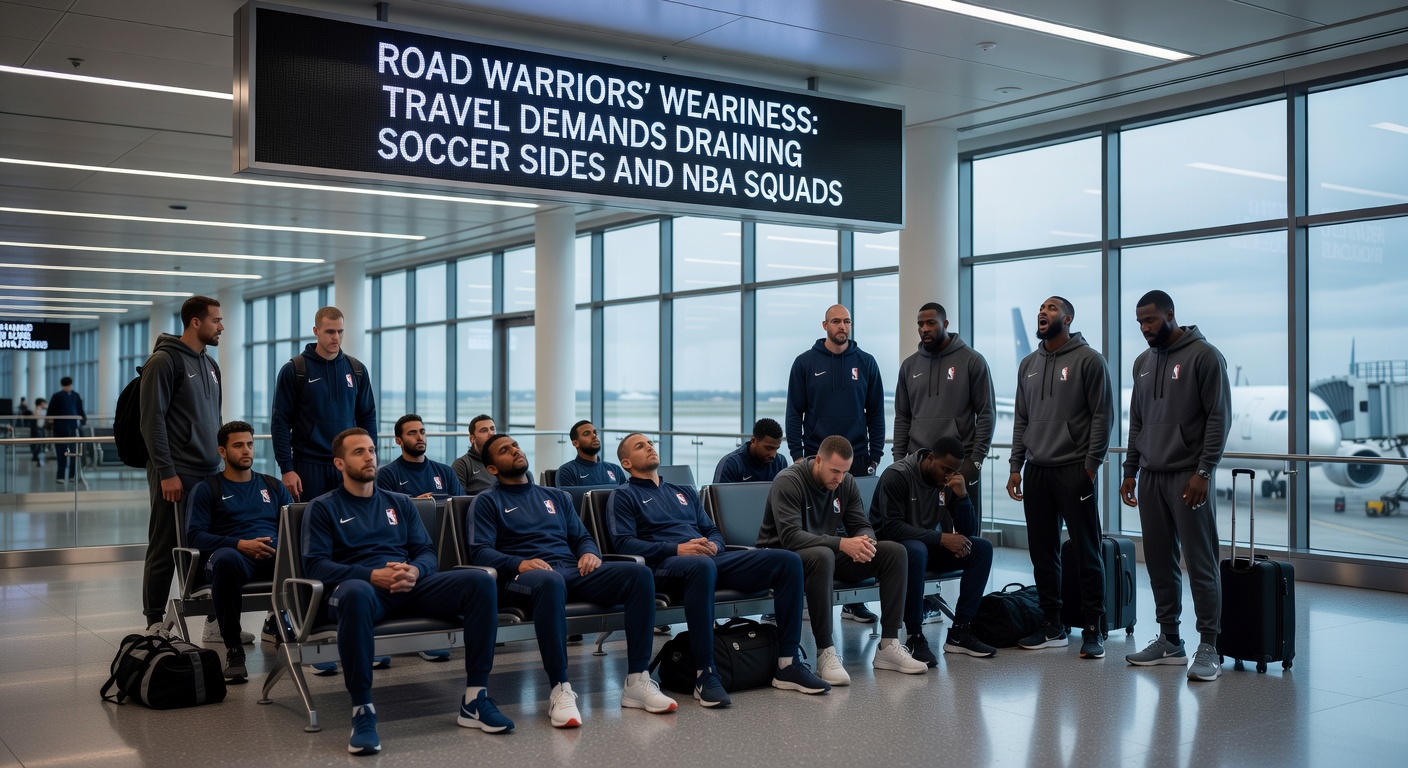
NBA teams endure the league's punishing schedule, with 41 road games per side and frequent back-to-backs spanning multiple states; league tracking data shows performance craters after cross-country flights, as evidenced by a 14% decline in three-point shooting accuracy for teams arriving less than 24 hours before tip-off.
Turns out, the Western Conference bears the brunt: squads like the Lakers or Clippers zigzag from LA to Boston (2,800 miles) then pivot to Miami, accumulating fatigue that manifests in turnover spikes; one analysis by Second Spectrum revealed road teams post-long flight average 4.2 more turnovers per game versus home counterparts.
People who've studied this closely, including researchers at the University of Colorado, link it to disrupted melatonin cycles; their 2024 paper in the Journal of Strength and Conditioning Research quantified a 9% drop in vertical leap for players after eastward travel, a factor in why East Coast teams hold a slight edge in inter-conference matchups.
Now consider March 2026's playoff race: as the Lakers geared up for a five-game road swing through the East—from LA to New York, Philly, Boston, and back—analysts noted their defensive rating ballooned by 8.5 points per 100 possessions compared to rested home stands, underscoring the weariness that grips squads mid-season.
Decoding the Data: Metrics That Matter
Advanced analytics paint a clear picture across both sports; in soccer, Wyscout data aggregates show teams on multi-leg road trips concede 1.3 expected goals more per match, while NBA's player tracking via SportVU logs a 7% reduction in sprint distance covered after flights exceeding 2,000 miles.
But here's where it gets interesting: sleep trackers worn by athletes reveal the crux; a collaboration between the Australian Institute of Sport and European soccer federations found elite players average just 5.8 hours of restorative sleep post-international travel, correlating with 11% higher foul rates and missed shots in NBA parlance.
Case in point: Inter Milan's 2025 Europa League campaign saw them fade in knockout legs after flights from Milan to Porto and back, with shot conversion dipping to 8% from a season norm of 14%; parallel that to the Clippers' 2026 March skid, where post-road-trip free-throw percentages slipped below 75%, handing opponents upset wins.
- Soccer road warriors lose 18% more duels in the air after long hauls, per InStat metrics.
- NBA squads post-back-to-back road games shoot 5% worse from deep.
- Both see injury upticks: 25% higher hamstring strains, data from league medical reports confirms.
Experts observe that hydration levels plummet too—dehydration from cabin air hits 12% body weight fluctuation thresholds, slowing reflexes just when stakes rise highest.
Cross-Sport Parallels and Emerging Solutions
Soccer and NBA share eerie similarities in travel's drag; both demand peak explosiveness, yet flights sap anaerobic capacity by 6-9% within 48 hours, as a joint study from Loughborough University (UK) and Stanford (US) detailed in Sports Medicine.
So clubs adapt: Liverpool's use of altitude simulation tents on flights mimics home conditions, boosting recovery markers by 15%; meanwhile, the Celtics employ NBA-approved nap pods courtside, trimming fatigue scores per Whoop band data.
That's not all; regulatory tweaks loom—UEFA trials shorter group stages to curb miles, while the NBA eyes fewer back-to-backs by 2027, per commissioner memos, but for now, the road grind persists, fueling those late-game collapses observers track religiously.
One researcher who monitored Barcelona's 2025 treble chase noted how a single red-eye to Munich shaved 2% off passing accuracy across three fixtures; akin to how the Thunder's 2026 road woes in March saw rebounding margins shrink by five boards per game.
Conclusion
The evidence stacks up relentlessly: travel demands drain soccer sides and NBA squads, manifesting in quantifiable slumps from sprints to shots, yet as March 2026's schedules thicken with continental clashes and playoff pushes, teams lean harder on science-backed tweaks to claw back edges.
Data underscores the pattern—road win probabilities dip 10-15% league-wide post-haul, but those mastering recovery protocols, like deploying biometric monitoring, hold firmer ground; ultimately, the weariness of road warriors shapes outcomes more than many realize, a fatigue factor bettors and fans alike ignore at their peril.