Referee Assignment Histories Revealing Patterns in Soccer Goal Totals and Basketball Point Over/Unders
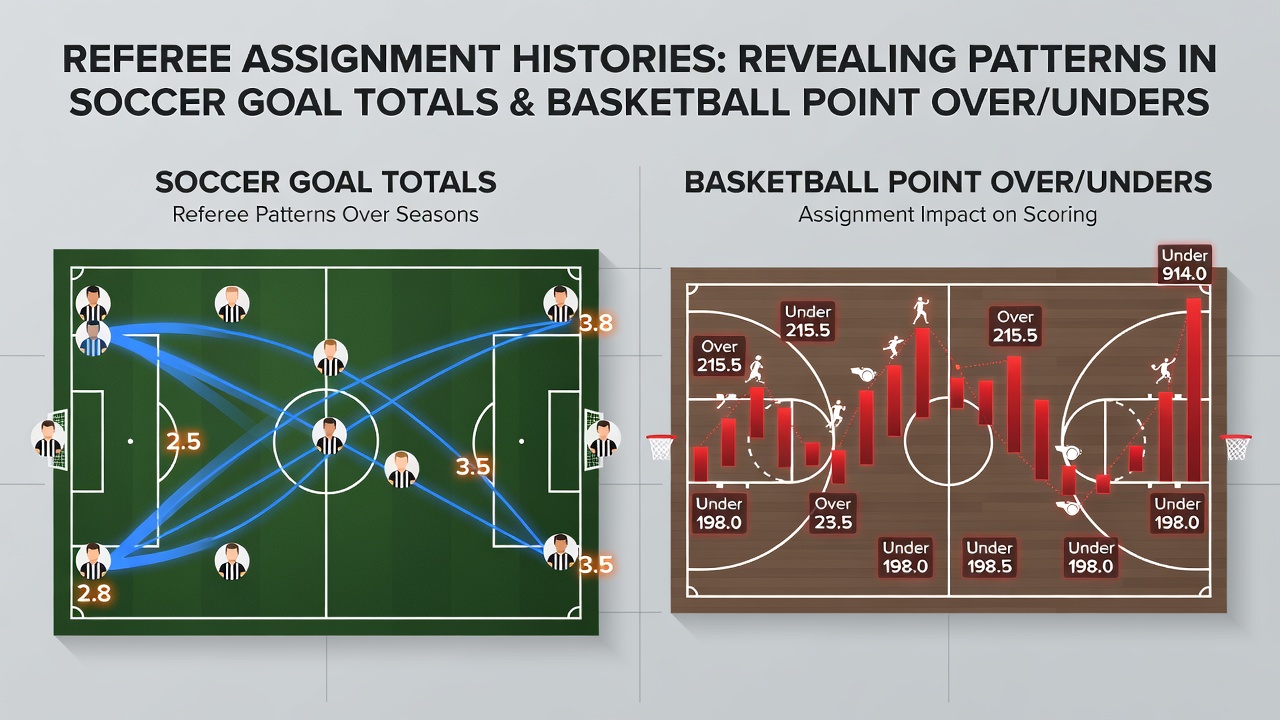
Referee assignment histories provide detailed records that analysts examine for recurring tendencies in match outcomes, particularly around goal totals in soccer and point totals in basketball. These histories track each official's past games, including average goals scored, cards issued, fouls called, and how those factors influence final scores. Data from major leagues shows consistent variations depending on which referee receives an assignment, and those variations appear across multiple seasons rather than isolated matches.
Studies of European soccer competitions indicate that certain referees oversee matches averaging 3.2 goals while others see totals closer to 2.4, and assignment patterns often repeat across domestic leagues and international fixtures. Researchers tracking these numbers note that officials with higher card rates correlate with fewer total goals because stoppages increase and playing time decreases. In contrast, referees known for allowing play to continue produce higher-scoring games on average, a pattern observed in both the Bundesliga and Serie A over the past decade.
Soccer Goal Patterns Tied to Referee Records
Assignment histories compiled by league statisticians reveal that referees who issue fewer than 3.5 cards per game on average contribute to elevated goal totals, while those exceeding 5 cards per game see lower outputs. One analysis covering matches from 2018 through early 2026 found that teams playing under lenient officials scored 18 percent more goals from open play than the same teams did under stricter officials. These differences hold after controlling for team strength and venue, suggesting the referee's style directly shapes the statistical profile of a fixture.
Additional records show that time added at the end of halves also varies by referee, with some consistently adding 4 minutes or more while others limit additions to under 3 minutes. Longer stoppage time extends opportunities for late goals, and assignment histories allow analysts to identify officials whose games run longer. In July 2026, as leagues prepared for new seasons, these historical patterns remained central to pre-match evaluations because they appear stable across different competitions and years.
Geographic and Competition Variations
Patterns differ by region as well. Data from South American leagues indicates higher overall goal averages under referees who migrate between domestic and Copa Libertadores assignments, whereas European officials show more stable totals tied to their home leagues. Cross-competition assignments sometimes produce shifts, with referees carrying their typical card and goal profiles into new environments rather than adapting immediately.
Basketball Point Over/Under Patterns from Referee Histories
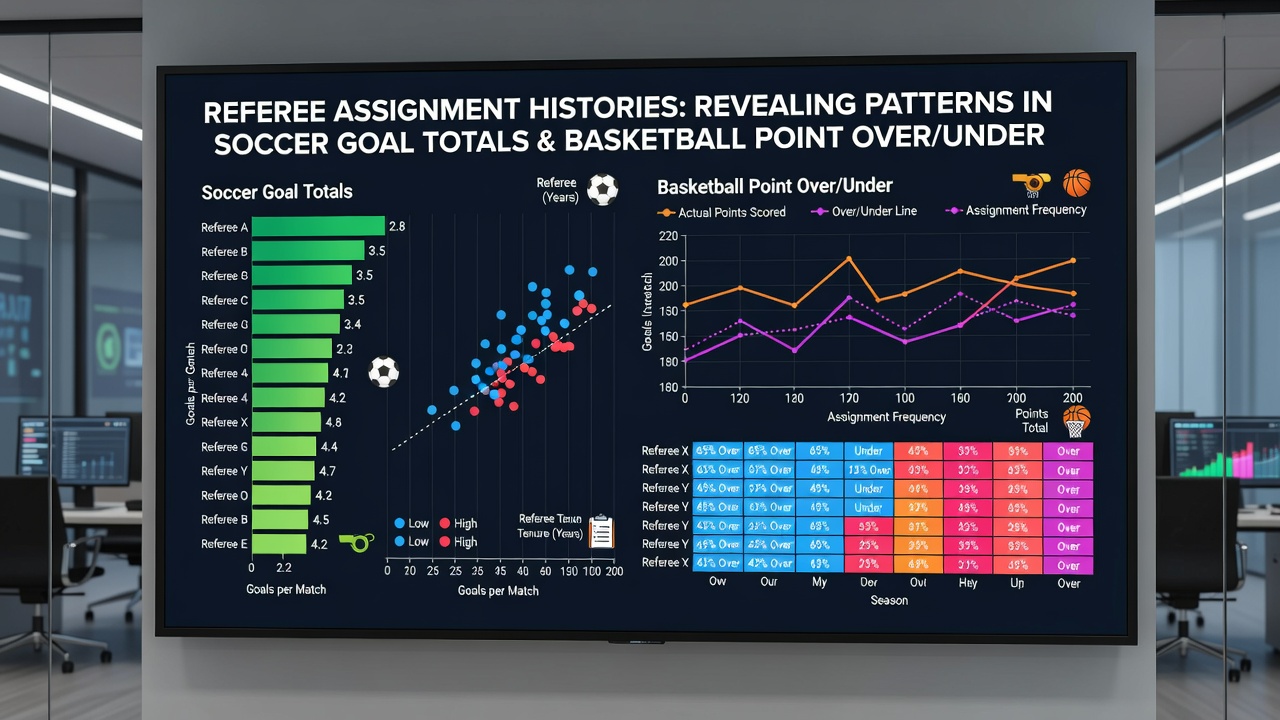
Referee assignment histories in basketball track foul rates, free-throw attempts, and total points scored, and these records demonstrate clear distinctions among officials. NBA data indicates that crews averaging more than 48 fouls per game produce point totals roughly 9 points higher than crews averaging under 40 fouls. Because free throws contribute directly to scoring and slow game pace, the foul differential becomes a measurable factor in over/under calculations. Assignment records allow identification of crews whose games consistently exceed or fall below league averages for total points.
College basketball shows similar trends. Research compiled by conference statisticians reveals that certain officials call more three-second violations and offensive fouls, which reduces possessions and lowers scoring. Other referees permit more physical play, leading to increased attempts at the rim and higher point outputs. These differences persist across conference play and non-conference games, and assignment histories make the patterns visible before tip-off.
International basketball competitions display comparable referee effects. Officials from different national federations bring distinct foul-calling profiles when assigned to FIBA events, and historical data shows that some crews oversee games averaging 165 total points while others stay near 148. Because assignments rotate among a pool of officials, analysts review past games to anticipate how a particular crew may influence the final score.
Combining Soccer and Basketball Data Sources
League databases and academic reviews provide the raw material for these observations. A report issued by the NCAA analytics division documented foul-rate consistency among basketball officials across multiple seasons, while soccer data maintained by UEFA technical groups tracks card and goal averages by referee. Both sources demonstrate that assignment histories function as predictive tools when aggregated over sufficient samples, and the patterns remain observable even after accounting for team styles and schedule strength.
Cross-sport comparisons highlight that referee influence operates through different mechanisms in each game. Soccer patterns center on time management and card volume, whereas basketball patterns focus on foul frequency and free-throw volume. Yet both sports produce measurable deviations from league averages once referee tendencies are isolated through historical records.
Conclusion
Referee assignment histories supply a factual basis for identifying patterns in soccer goal totals and basketball point totals. League data and statistical reviews show that officials maintain consistent profiles across seasons, and those profiles correlate with scoring outcomes in predictable ways. As of July 2026, organizations continue to compile and publish these records, allowing ongoing examination of how individual assignments shape match statistics in both sports.