Mapping Altitude and Climate Variables Against Team Efficiency Ratings in Mountain Venue Matchups
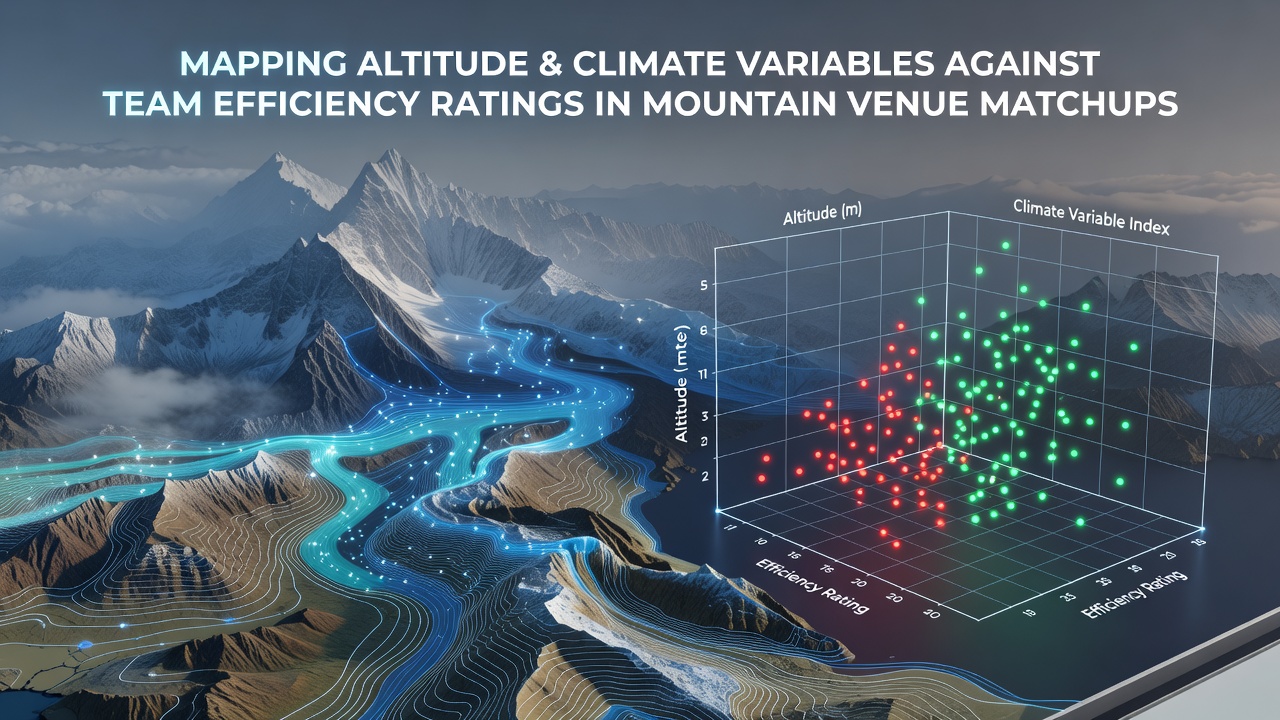
High-elevation sports venues create distinct performance environments where altitude and climate variables intersect with team efficiency ratings in measurable ways, and analysts continue to refine mapping techniques that connect these factors across multiple leagues. Mountain venues such as those in Denver, Mexico City, and La Paz present consistent challenges because reduced oxygen availability alters physiological responses while temperature swings and humidity shifts further influence recovery rates and movement patterns during competition.
Altitude Effects on Physiological and Tactical Metrics
Reduced partial pressure of oxygen at elevations above 1,500 meters leads to measurable declines in aerobic capacity, and studies tracking heart rate variability show that visiting teams often experience elevated resting rates during the first 48 hours after arrival. Teams based at sea level record average efficiency drops of 8 to 12 percent in the opening quarter of games played above 2,000 meters, according to aggregated performance data compiled through 2025. Local squads demonstrate partial acclimatization through higher red blood cell counts, which supports sustained defensive pressure and transition speed even as visiting units slow their pace.
Coaches adjust substitution patterns earlier in mountain games because fatigue markers appear sooner in box-score efficiency calculations, and tracking systems record lower sprint distances per minute for non-acclimated players. Researchers at institutions focused on high-altitude physiology note that these adjustments become most pronounced when matches occur within 24 hours of travel rather than after extended preparation periods.
Climate Variables and Their Interaction With Elevation
Temperature gradients and humidity levels compound altitude stress because cooler, drier air at elevation accelerates dehydration while rapid diurnal swings strain thermoregulation systems. Data collected from venues in the Rockies and Andes indicate that afternoon temperature drops of 10 degrees Celsius or more correlate with reduced three-point shooting percentages and increased turnover rates in basketball, whereas soccer teams show elevated error counts in passing accuracy under similar conditions. Wind patterns channeled through mountain corridors add another layer, disrupting ball flight trajectories in outdoor sports and altering defensive positioning calculations tracked by optical systems.
August 2026 brought extended heat waves across several North American mountain ranges, and analysts observed that elevated dew points during those weeks produced efficiency rebounds for visiting teams that had prepared with targeted hydration protocols. European Environment Agency reports on alpine climate trends provide comparative datasets that help contextualize these North American observations across different geographic zones.
Constructing Integrated Mapping Frameworks
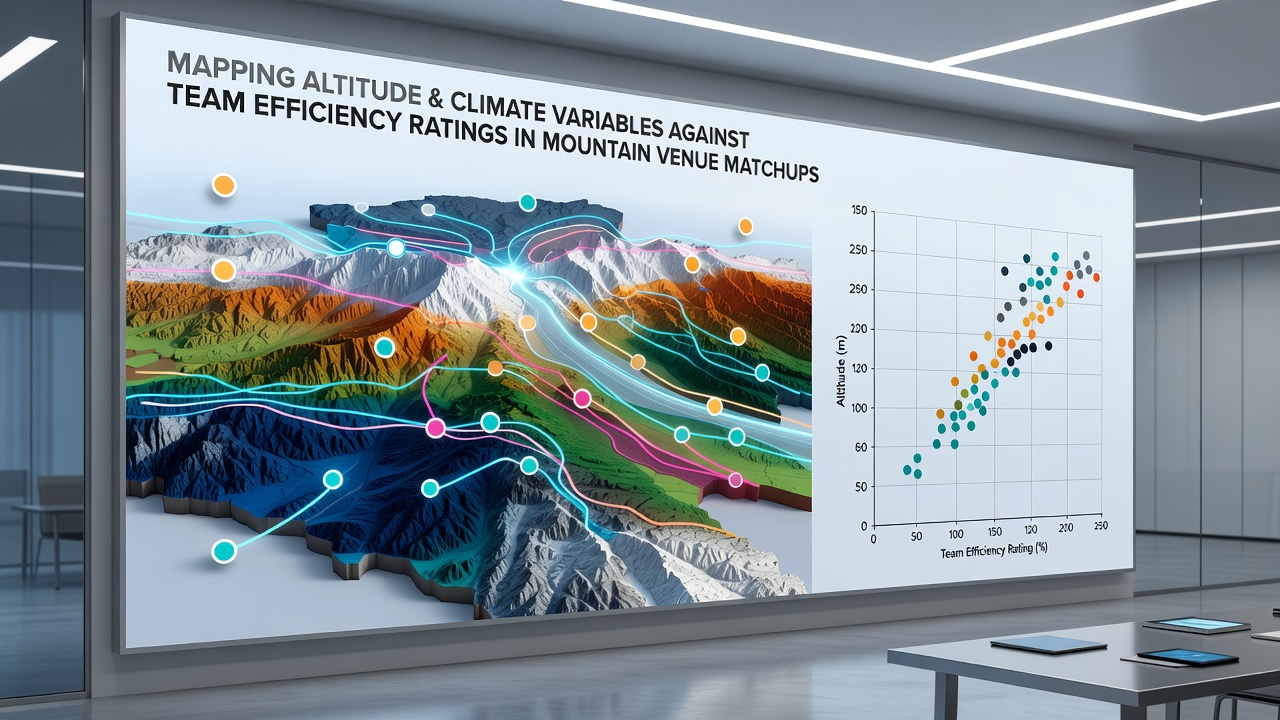
Analysts combine topographic datasets with real-time climate feeds and standardized efficiency models to produce layered visualizations that highlight performance differentials. These frameworks assign weighted values to oxygen saturation thresholds, barometric pressure readings, and surface temperature records before overlaying them against adjusted plus-minus figures or expected goal differentials. National Oceanic and Atmospheric Administration archives supply granular atmospheric data that feed directly into these models, allowing researchers to isolate altitude-driven effects from broader seasonal trends.
Multi-season comparisons reveal that efficiency gaps narrow when visiting teams schedule arrival four or more days prior to competition, yet gaps widen again when climate anomalies such as unseasonal precipitation coincide with high game loads. University of Innsbruck research teams have contributed longitudinal studies on European alpine venues that complement North American findings, showing similar patterns in soccer and basketball contexts despite differences in match duration and scoring systems.
League-Specific Observations and Venue Comparisons
In basketball, home teams at 1,600-meter venues maintain higher assist-to-turnover ratios across back-to-back sets, while soccer sides in venues exceeding 3,500 meters record elevated long-ball completion percentages because visiting midfield units tire faster. Ice hockey matchups at moderate mountain elevations demonstrate subtler shifts, primarily visible in shot-blocking efficiency and penalty-kill success rates when humidity rises. Data aggregation platforms now tag each performance metric with concurrent altitude and climate tags, enabling rapid identification of recurring interaction effects across hundreds of games.
Cross-league reviews indicate that younger rosters experience steeper efficiency declines under combined stress, whereas veteran groups with documented high-altitude experience sustain closer-to-baseline output. These patterns hold across both regular-season and postseason samples collected through mid-2026.
Conclusion
Mapping altitude and climate variables against team efficiency ratings continues to evolve as sensor networks expand and modeling techniques incorporate additional physiological inputs. Venues at elevation will remain distinct competitive environments where preparation timelines, roster composition, and real-time atmospheric conditions intersect to shape measurable outcomes across basketball, soccer, and related mountain sports.