Flight paths to form: mapping airline miles against soccer squads and tennis players for contest forecasts

Airline miles logged by soccer squads and tennis players have drawn increasing attention from analysts tracking how travel distance correlates with match outcomes across major competitions. Data from international tournaments shows that squads covering more than 5,000 kilometers in the week before a fixture often record lower possession retention rates and fewer shots on target compared with teams that remain within regional travel zones. Observers note these patterns appear consistently in both European club competitions and South American qualifiers where cross-continental flights factor heavily into scheduling.
Tennis circuits present a parallel case where players accumulate extensive air miles during the swing between North American hard courts and European clay events. Tournament records indicate that competitors traveling more than 10,000 kilometers within a 14-day window experience measurable declines in first-serve percentages and rally endurance during early rounds. Researchers at institutions focused on sports physiology have compiled datasets linking these distances directly to recovery markers such as sleep duration and heart-rate variability tracked via wearable devices.
Travel metrics in soccer contexts
League schedules in 2026 place particular emphasis on long-haul movements ahead of the FIFA World Cup opening matches set for June across North American venues. CONCACAF tracking reports reveal that national teams flying from South American bases to training camps in the United States log average distances exceeding 8,000 kilometers, and historical performance logs show a corresponding dip in high-intensity running output during the first two matches of the tournament. Analysts cross-reference these figures with GPS data collected from players to isolate fatigue variables from tactical adjustments made by coaching staff.
Domestic leagues also generate useful comparisons when clubs undertake midweek European trips before returning for weekend fixtures. Figures compiled by the Union of European Football Associations demonstrate that teams completing round-trip flights longer than 3,000 kilometers post a higher rate of goals conceded in the subsequent domestic match. These datasets allow forecasters to weight expected goal models by incorporating cumulative mileage as an input alongside traditional metrics such as recent form and head-to-head results.
Tennis player mileage patterns
Grand Slam preparation calendars require athletes to navigate dense travel itineraries between April and June, with the transition from clay-court events in Europe to grass-court tournaments in the United Kingdom adding further distance. Performance databases maintained by the Association of Tennis Professionals indicate that players exceeding 12,000 kilometers in the month prior to Wimbledon show reduced win percentages in best-of-five encounters during the first week. Such statistics become especially relevant when evaluating draw forecasts for the June 2026 edition where several top-ranked competitors are projected to arrive from distant regional circuits.
Coaches and support staff increasingly rely on flight logs combined with on-court movement data to adjust training loads. Studies published in the Journal of Sports Sciences highlight correlations between total air miles and elevated error rates on second serves, particularly among players who cross multiple time zones without adequate recovery windows. These findings support the construction of predictive frameworks that adjust probability estimates for individual matches based on verified travel histories rather than surface preference alone.
Integrated forecasting approaches
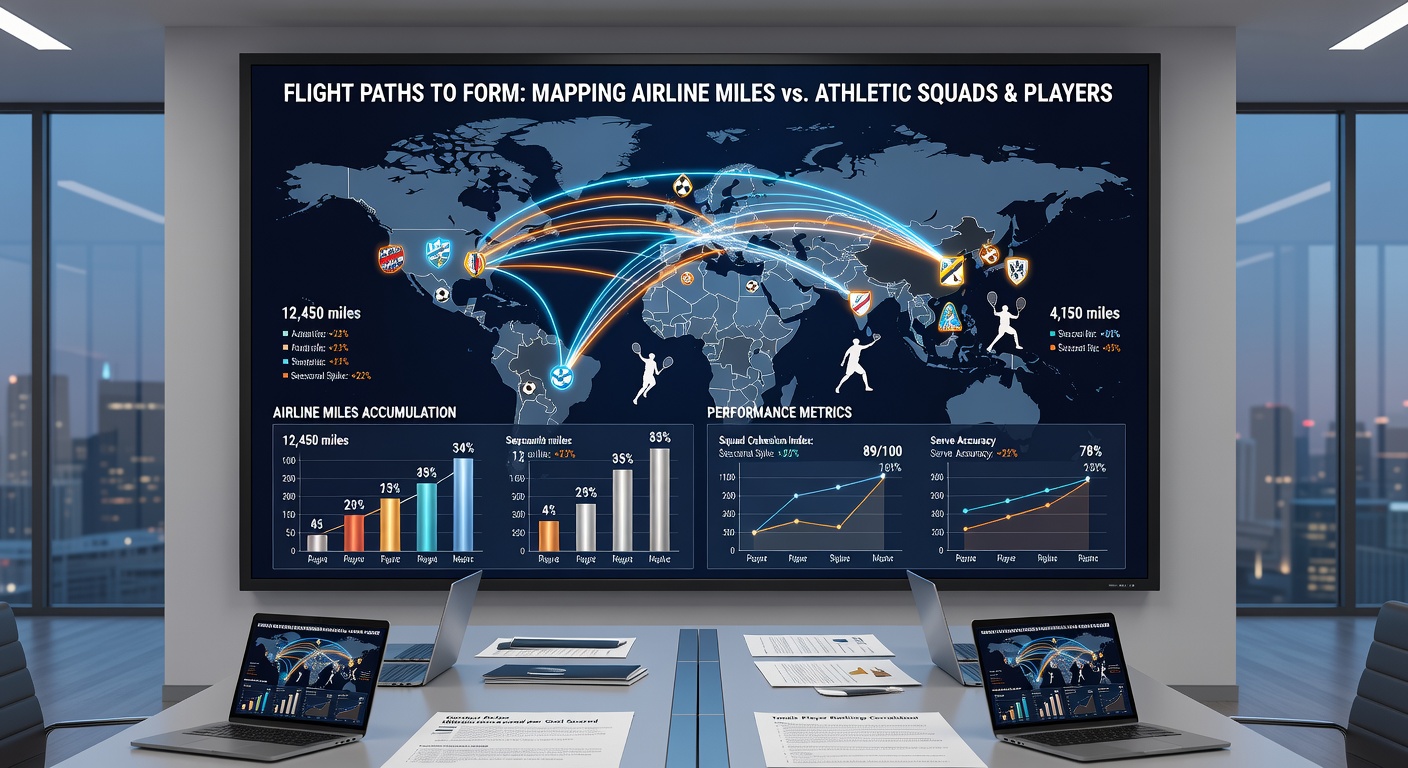
Forecast models that merge airline data with squad and player statistics continue to evolve as more granular flight records become accessible through aviation databases. Australian Institute of Sport researchers have examined similar variables across multiple codes and report that combining cumulative distance traveled with fixture density produces stronger alignment with observed results than either variable examined independently. Soccer and tennis forecasters apply these methods when constructing contest projections for both individual matches and multi-event accumulators.
June 2026 schedules intensify these considerations because overlapping international soccer windows coincide with the latter stages of several tennis tours. Analysts therefore examine overlapping travel demands placed on athletes participating in exhibition events or promotional obligations immediately before major tournaments. Data from the International Olympic Committee archives on prior multi-sport cycles shows that athletes managing dual commitments across continents often display performance variability that exceeds baseline expectations derived from ranking points alone.
Data integration challenges and solutions
Compiling accurate airline mile figures requires cross-referencing official flight manifests with team travel declarations submitted to governing bodies. European sports federations maintain centralized repositories that facilitate such matching while privacy protocols limit access to individual player records in tennis. Organizations such as the Canadian Centre for Ethics in Sport have published guidelines on ethical data usage that allow aggregate travel statistics to inform performance models without compromising athlete confidentiality.
Software platforms used by professional bettors and media outlets now ingest these combined datasets to generate updated probability surfaces before each round of fixtures. The resulting outputs adjust baseline expectations for teams or players whose recent itineraries include extended long-haul segments, and they recalibrate continuously as new flight information emerges. Observers note that this approach yields measurable improvements in forecast calibration when tested against historical results spanning multiple seasons.
Conclusion
Mapping airline miles against soccer squads and tennis players supplies an additional quantitative layer for contest forecasts when integrated with established performance indicators. Datasets from major governing bodies and academic research groups demonstrate consistent relationships between cumulative travel distance and specific on-field or on-court metrics. As schedules for June 2026 bring heightened travel demands into focus, analysts continue refining models that incorporate verified mileage figures to produce more precise projections across both sports.