Elevation's Quiet Influence on Totals and Spreads Across High-Altitude Soccer Pitches and Basketball Courts
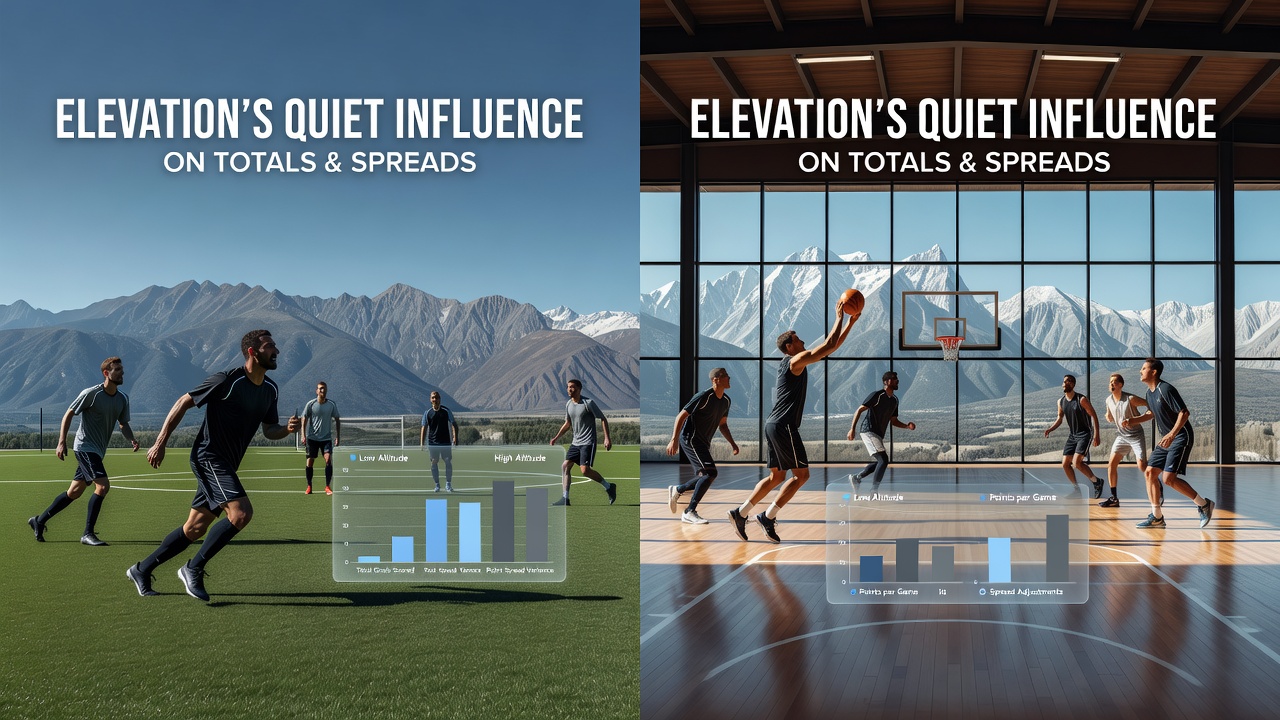 Data from atmospheric studies shows that air density drops significantly above 1,500 meters, which alters projectile motion and oxygen availability for athletes. Soccer pitches in La Paz sit at roughly 3,650 meters while basketball courts in Denver reach about 1,600 meters, and both locations produce measurable shifts in scoring patterns that betting markets track through totals and spreads. Researchers at the University of Colorado Boulder have documented how reduced drag allows balls to travel farther and faster, while lower oxygen levels accelerate fatigue in players who train at sea level.
How Reduced Air Density Changes Ball Behavior
Lower atmospheric pressure means less resistance against a soccer ball or basketball in flight, so passes, shots, and long kicks cover extra distance with the same force. In June 2026 several CONMEBOL qualifiers are scheduled for venues above 2,500 meters, and historical match logs indicate teams accustomed to lower elevations often concede more goals from distance because goalkeepers misjudge trajectories. Basketball data from NBA teams visiting Denver reveals three-point attempts convert at slightly higher rates during the first three quarters, before fatigue compounds and shooting percentages decline in the fourth.
Studies published through the American College of Sports Medicine confirm that a soccer ball struck at 80 kilometers per hour travels approximately 5 to 8 percent farther at 3,000 meters than at sea level, which expands the effective range of set pieces and counterattacks. Observers note that free-kick specialists from lower-altitude clubs frequently adjust their aiming points upward after the first 15 minutes of exposure, and coaches who prepare detailed video breakdowns of these adjustments tend to see their teams maintain tighter defensive lines.
Impact on Player Physiology and Game Totals
Oxygen saturation falls faster at altitude, so players who have not acclimatized experience quicker lactate buildup and shorter high-intensity bursts. Soccer matches played in Quito or La Paz show average total goals rising by roughly 0.4 per game compared with neutral venues, according to aggregated league statistics spanning the past decade. The increase stems primarily from defensive lapses in the final 20 minutes rather than early scoring explosions, because both teams suffer similar endurance drops yet visiting sides often lack the same recovery protocols.
Basketball presents a parallel pattern. NBA tracking data indicates that teams playing back-to-back games involving a Denver stop post lower fourth-quarter points per possession after the third quarter, which compresses totals when the home side leads by double digits entering the final period. Spreads widen slightly for the Nuggets in these situations because opponents struggle to sustain defensive pressure, yet the margin rarely exceeds the typical six-point home-court advantage observed at lower elevations.
Betting Market Adjustments and Historical Patterns
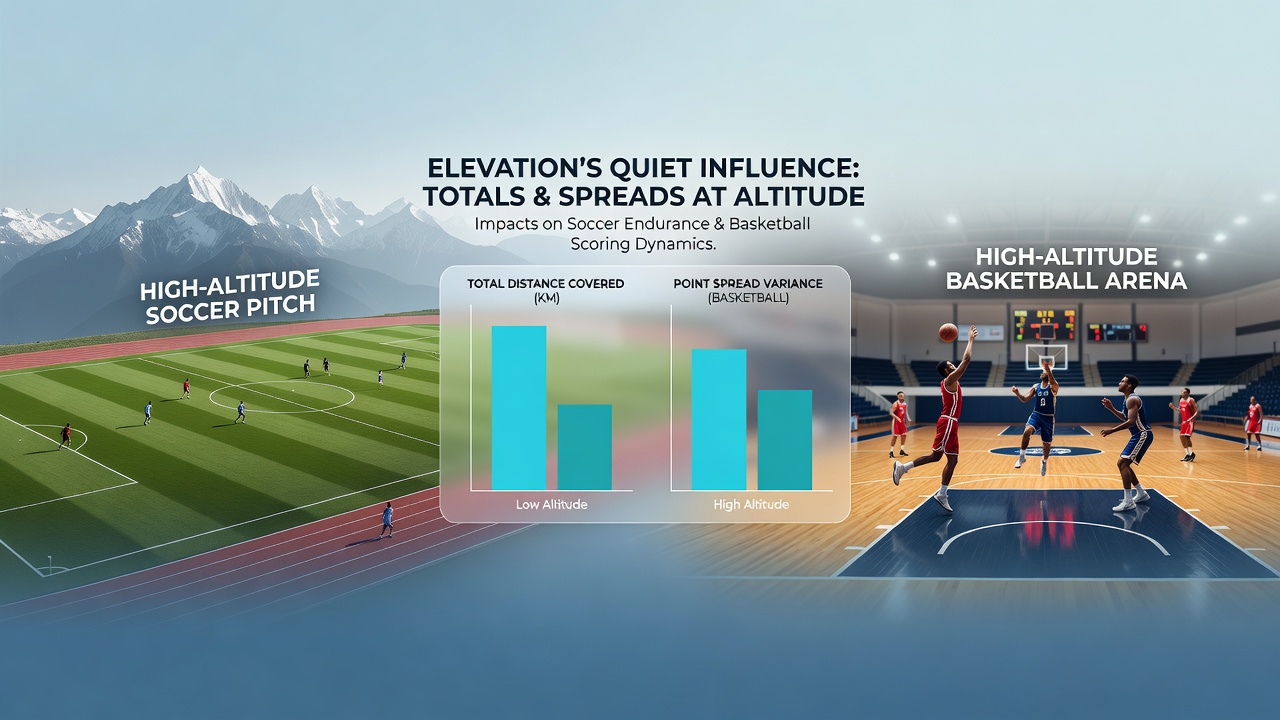
Oddsmakers incorporate altitude variables into totals by reviewing multi-year samples that isolate matches above 1,500 meters, and the resulting lines typically sit 3 to 5 points higher for basketball overs and 0.3 to 0.6 goals higher for soccer overs. Those adjustments reflect empirical scoring distributions rather than speculation, because repeated exposure to the same venues produces consistent deviations from sea-level benchmarks. Teams that rotate squads aggressively before altitude fixtures sometimes mitigate the fatigue effect, yet the underlying physical constraints remain unchanged.
Spread movement follows a different rhythm. Home sides at altitude retain a structural edge that grows as matches progress, particularly when visiting clubs arrive within 48 hours of game time. Data compiled by the Australian Institute of Sport shows that acclimatization periods of five days or more narrow the performance gap by roughly half, which explains why certain national teams schedule training camps at intermediate elevations before traveling to Bolivia or Ecuador.
Training and Preparation Strategies Observed in 2026
Clubs preparing for June 2026 fixtures have adopted altitude simulation tents and pre-arrival hydration protocols that aim to stabilize blood oxygen levels. These measures do not eliminate the environmental influence but they compress the variance in second-half output. Soccer analysts tracking possession metrics note that teams using such preparation maintain higher pass completion rates after the 70-minute mark compared with unprepared opponents, which indirectly caps the number of transition opportunities that produce extra goals.
Basketball organizations similarly monitor sleep and recovery metrics when traveling to Denver, and the resulting box-score patterns show tighter spreads in the final minutes when both benches manage substitution patterns effectively. The physical realities of thinner air continue to shape outcomes, yet the magnitude of those effects scales with preparation quality and squad depth.
Conclusion
Altitude venues create predictable but nuanced shifts in scoring that influence both totals and spreads across soccer and basketball. Air density reductions alter ball flight while oxygen constraints accelerate fatigue, and the combined result appears consistently in historical data sets. Teams and markets that account for these variables through preparation timelines and statistical modeling position themselves to interpret results more accurately when high-altitude fixtures occur.