Altitude Effects on Team Outputs: Finding Edges in High-Elevation Soccer Fixtures and NBA Contests

High elevation venues alter athletic performance through reduced oxygen availability, and researchers have documented measurable impacts on both soccer squads and NBA rosters when they travel to these locations. Teams face lower air density that affects endurance, recovery intervals, and explosive movements, while visiting sides often show steeper declines in output compared to acclimatized hosts. Data from multiple competitions illustrate these patterns, and analysts track them to identify performance variances that appear repeatedly across seasons.
Physiological Responses at Elevation
Reduced partial pressure of oxygen triggers faster fatigue in aerobic systems, and studies indicate that heart rates rise while maximum oxygen uptake drops for athletes who arrive without prior adaptation. Soccer players cover less total distance in the second halves of matches above 2,000 meters, whereas NBA athletes experience quicker declines in sprint frequency and defensive rotations during the fourth quarter. Researchers at institutions such as the Australian Institute of Sport have measured these changes across controlled trials, and the findings show consistent drops in repeated high-intensity efforts when competitors lack sufficient time at altitude.
Visiting teams in both sports encounter additional strain from travel combined with the environmental shift, and recovery between games suffers when schedules allow minimal adjustment periods. Data collected during CONMEBOL qualifiers in La Paz and Quito reveal that visiting sides concede more goals after the 60-minute mark, while NBA road teams in Denver post lower effective field goal percentages in the latter stages of contests. Observers note that these trends hold across multiple seasons even as training methods evolve.
Soccer Fixtures at Notable Elevations
Matches in Bolivia, Ecuador, and Mexico present some of the clearest examples, and historical records from World Cup qualifiers show home teams securing points at rates well above their season averages. The 2026 FIFA World Cup, scheduled to begin in June 2026, will feature venues in Mexico City at approximately 2,240 meters, and preliminary assessments by confederation medical panels indicate that squads arriving from sea-level nations will require structured acclimatization windows. Teams that allocate extra days on site before fixtures have demonstrated smaller performance gaps in past tournaments, and statistical models now incorporate elevation differentials when projecting expected goal outputs.
European clubs competing in Copa Libertadores encounters at similar heights also exhibit elevated error rates in passing accuracy and reduced pressing intensity after halftime. Analysts compile these metrics from match-tracking systems, and the compiled figures reveal that the magnitude of decline correlates directly with the elevation gap between home and away training bases.
NBA Performance Patterns in Thin Air
The Denver Nuggets maintain a long-standing home record advantage tied to altitude, and league-wide data sets confirm that opposing teams shoot lower percentages from three-point range and record fewer fast-break points when playing at Ball Arena. Visiting rosters that fly in on game day or with limited recovery time show the largest decrements, whereas squads that incorporate altitude simulation in advance training report narrower margins. Researchers tracking player-tracking data across the 2024-25 and 2025-26 seasons have isolated these variables, and the resulting models separate altitude effects from other factors such as rest days and travel distance.
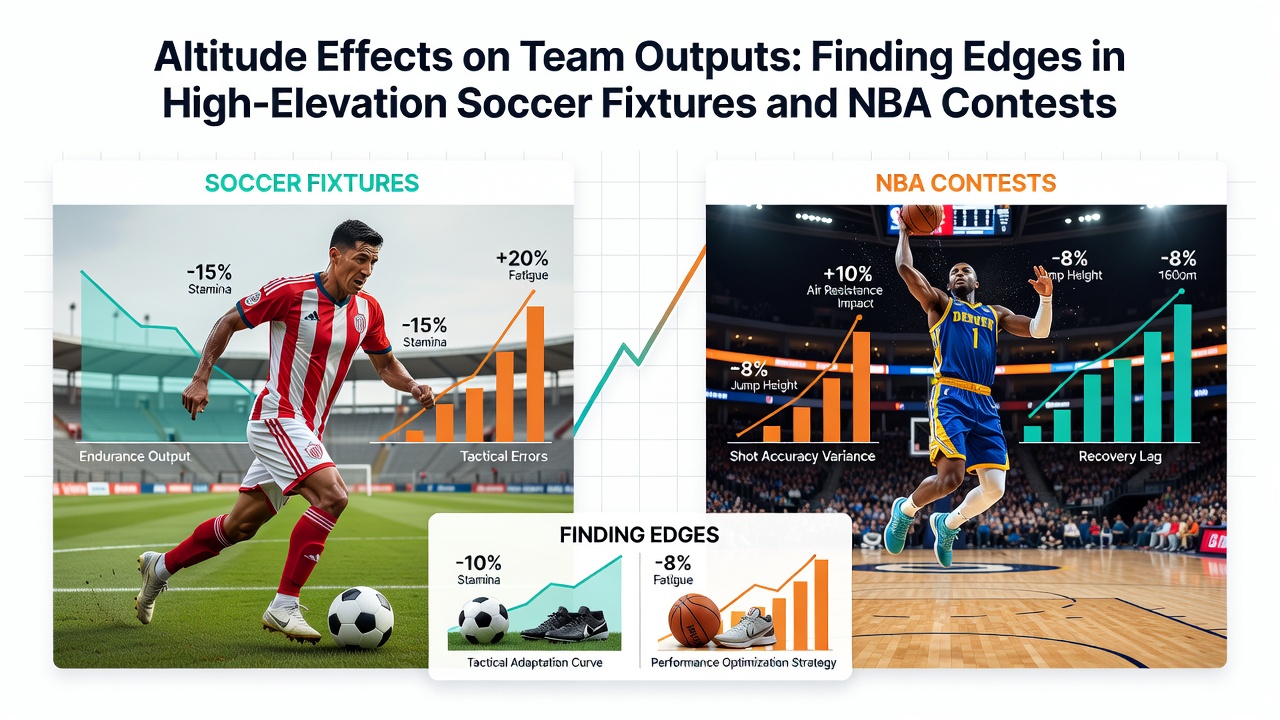
Playoff series that reach Denver further amplify these differences, and historical box-score aggregates indicate that road teams average fewer points in the paint during elimination games. League medical staff have begun sharing acclimatization protocols, and several franchises now schedule brief training camps at intermediate elevations before trips to Colorado.
Identifying Performance Edges Through Data
Performance databases maintained by sports science groups allow direct comparison of team outputs across elevation bands, and regression analyses consistently isolate altitude as a significant predictor of variance in total distance covered, shot volume, and turnover rates. Soccer betting markets sometimes adjust totals and spreads to account for these shifts, while NBA oddsmakers have incorporated venue-specific adjustments for years. Those who review granular tracking data from multiple high-elevation sites find that the largest edges emerge when a visiting side plays its second consecutive road game at altitude without an intervening rest period.
Additional layers appear when examining individual player responses, and workload monitoring systems show that athletes with prior exposure to similar conditions maintain higher output levels. League-wide datasets from both sports continue to expand, and organizations such as the International Olympic Committee have funded further longitudinal studies to refine prediction accuracy ahead of events like the 2026 World Cup.
Conclusion
Altitude imposes repeatable constraints on team outputs in soccer and basketball, and the documented physiological and statistical patterns supply objective inputs for performance forecasting. As schedules incorporate more high-elevation venues, including those planned for June 2026, continued collection of sport-specific metrics will sharpen understanding of how elevation differentials translate into measurable differences on the field and court.